
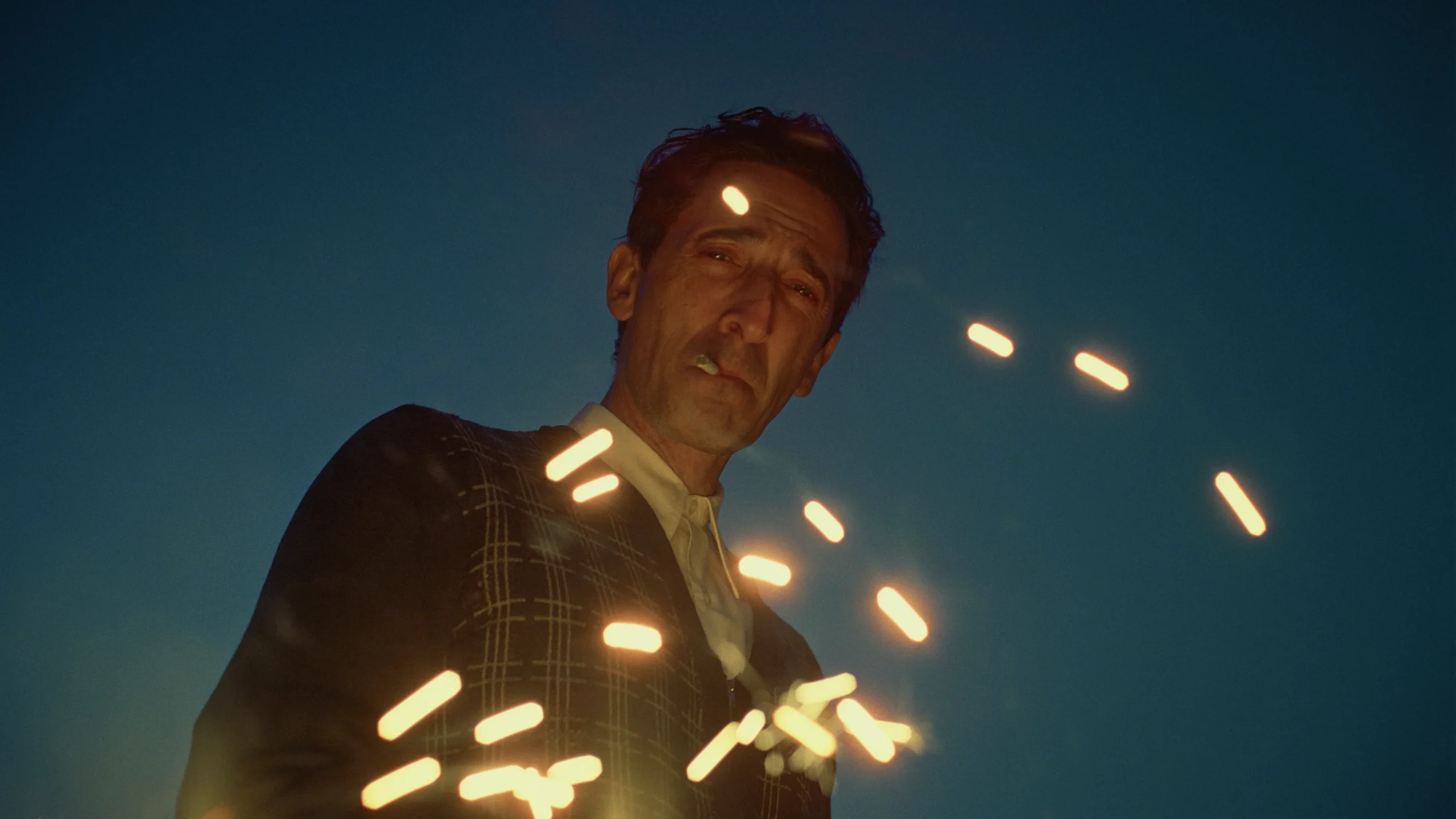
In The Brutalist, director Brady Corbet embarks on an ambitious journey, crafting a sprawling narrative that delves into the complexities of ambition, identity, and the immigrant experience in post-war America. Spanning over three and a half hours, this epic tale centers on László Tóth, portrayed by Adrien Brody, a Hungarian Jewish architect and Holocaust survivor striving to rebuild his life and career in a new land. While the film’s grandeur and thematic depth are commendable, it occasionally falters under the weight of its own aspirations, leading to a viewing experience that is as challenging as it is enlightening.
The narrative follows László Tóth’s journey from the devastation of war-torn Europe to the promise of America. Upon arriving in Philadelphia in 1947, Tóth confronts the harsh realities of displacement, grappling with personal loss and the daunting task of reestablishing his architectural career. His fortunes take a turn when he encounters Harrison Lee Van Buren, a wealthy industrialist played by Guy Pearce, who commissions him to design a monumental community center. This partnership propels Tóth into the upper echelons of society, but it also entangles him in a web of moral and ethical dilemmas that challenge his integrity and sense of self. Adrien Brody delivers a compelling performance as László Tóth, capturing the character’s vulnerability, determination, and internal conflict with nuanced subtlety. His portrayal conveys the profound sense of loss and yearning that defines Tóth’s existence, making his journey both relatable and heartrending. Felicity Jones, as Tóth’s wife Erzsébet, brings depth to her role, embodying the resilience and strength required to navigate the complexities of their new life. Guy Pearce’s depiction of Harrison Lee Van Buren adds a layer of complexity to the narrative, presenting a benefactor whose intentions are as enigmatic as they are influential.
Visually, The Brutalist is a masterpiece. Cinematographer Lol Crawley employs the rarely used VistaVision format, delivering expansive and immersive visuals that enhance the film’s epic scope. The architectural designs featured in the film are meticulously crafted, reflecting the modernist principles that Tóth champions. Daniel Blumberg’s evocative score complements the visual grandeur, weaving a sonic tapestry that underscores the emotional and thematic currents of the narrative. Despite its many strengths, The Brutalist is not without its challenges. The film’s extensive runtime, inclusive of a 15-minute intermission, may test the endurance of some viewers. While the first half is lauded for its impactful storytelling, the latter portion has been critiqued for a perceived loss of focus, with certain plot developments feeling rushed or underexplored. This uneven pacing can detract from the overall cohesion of the narrative, leaving audiences with lingering questions and a sense of incompleteness.
The Brutalist has garnered critical acclaim, securing multiple nominations and awards, including ten nominations at the 97th Academy Awards and winning four BAFTAs. Its exploration of the immigrant experience, the pursuit of the American Dream, and the moral complexities of artistic ambition resonate deeply, offering a rich tapestry of themes for contemplation. However, its demanding length and occasional narrative inconsistencies may polarize audiences, making it a film that is as likely to inspire admiration as it is to provoke debate. The Brutalist stands as a testament to Brady Corbet’s directorial audacity, presenting a film that is both grand in vision and intricate in its examination of human resilience and ambition. While it may not achieve perfection in every facet, its artistic merits and the compelling performances of its cast make it a significant contribution to contemporary cinema, inviting viewers to reflect on the multifaceted nature of identity, success, and the enduring quest for meaning in the aftermath of profound loss.
